Circular Economy

– Reuse of essential nutrients

The fish sludge processed by Bioretur consists of feed residues and fish feces from the the aquaculture facility. The sludge contains minerals such as phosphorus and nitrogen, as well as heavy metals like zinc and cadmium. Therefore, the sludge must undergo a process before it can be safely reintroduced back into the system, such as in the form of natural fertilizer. According to the Norwegian Institute of Bioeconomy Research (NIBIO), approximately 27,000 tons of nitrogen and 9,000 tons of phosphorus end up in the sea each year in the form of fish sludge. By entering into a Bioretur Service Agreement, our customers contribute to addressing this issue by reducing waste and increasing resource availability.

Significant volumes (Graph to the right)
Currently, it is primarily in land-based and closed aquaculture facilities where sludge can be efficiently collected and processed. Due to stricter purification requirements, larger fish on land (post-smolt), and the expected development of fish farming on land, we will soon be dealing with enormous quantities of fish sludge that need to be collected, processed, transported, and refined.
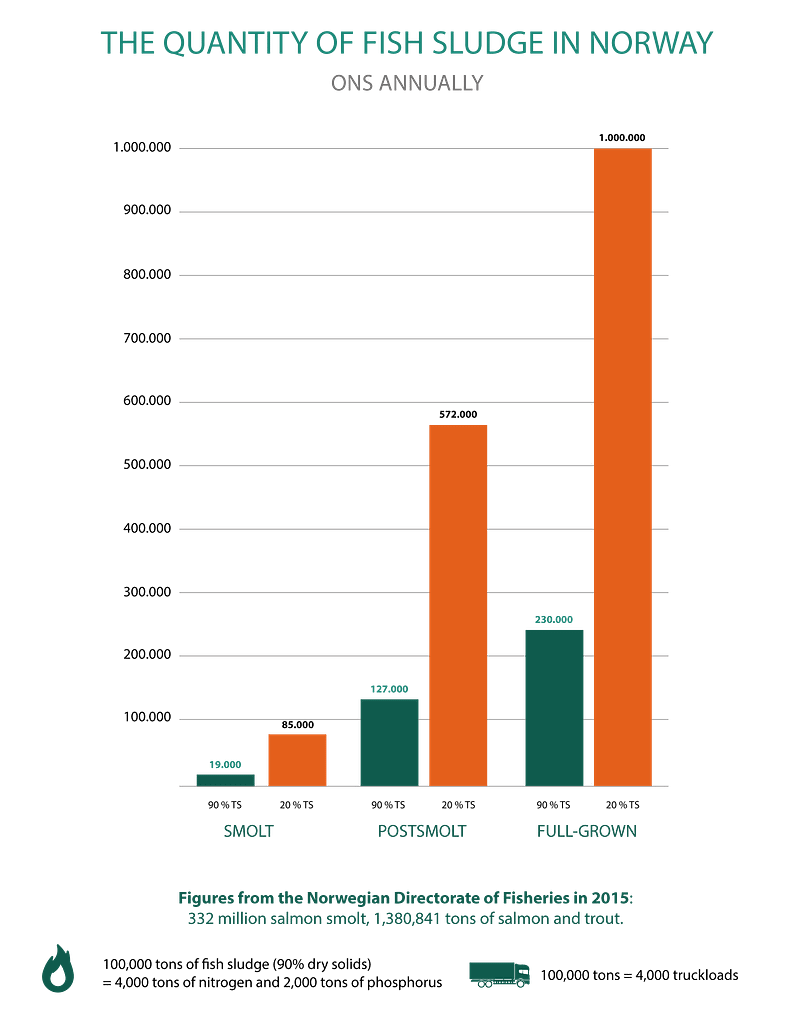
Graph - Quantity of fish sludge in Norway

Continue reading:

Global resource utilization

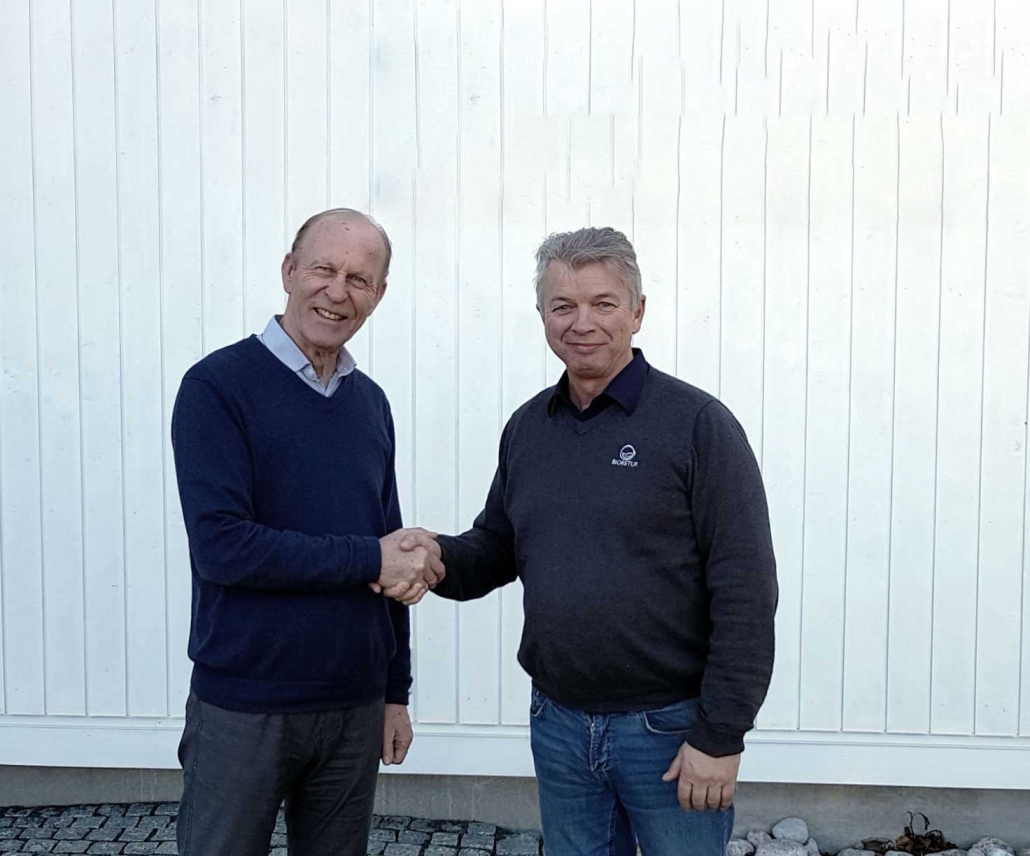
(From left) CEO Torleiv Næss Ugland of Terramarine and Managing Director of Bioretur Steinar Wasmuth enter into a collaboration agreement.

17% of the world’s land areas are considered “severely depleted,” and this is increasing. Source: International Soil Reference and Information Centre.

Bioretur has entered into a long-term agreement with Terramarine AS, which uses the fish sludge powder as a raw material in a series of fertilizer products delivered to agriculture in Southeast Asia. These products are specifically designed for various tropical crops, and Terramarine has a team of skilled agronomists and specialists in Ho Chi Minh City who engage in extensive research and provide advisory services to customers. There are strict quality requirements for using fish sludge in this manner, both in terms of heavy metal content and hygiene. Bioretur has a hygienization process that meets these requirements, which is not the case with all drying technologies available in the market today.

Terramarine’s customers in Southeast Asia are highly satisfied with the high organic content of the dried fish sludge, and through research and development work in Vietnam, its excellent fertilizer effectiveness has been demonstrated. In Southeast Asia, there is great interest in organic fertilizers due to a lack of organic content in the soil and problems with salt buildup in soil where only chemical fertilizers are used. Thanks to the agreement with Terramarine, Bioretur can handle all the fish sludge produced by aquaculture for the next decades.

Sustainability and sludge transportation

Sludge transportation is both economically and environmentally burdensome. Bioretur continuously strives to have the best solution on the market, including in terms of environmental sustainability. To reduce CO2 emissions associated with our business operations, we commit to the following:

  1. Contribute to reducing the need for transportation from fish farming facilities
  • Process the sludge on-site to minimize volume, such as by drying the sludge to 90% dry solids (see graph above). Choosing a Bioretur facility is already a climate measure in itself.
  • Utilize the sludge in the local area if sustainable and approved solutions exist.
  1. Sustainable transportation
  • Use trains and other forms of transportation powered by electricity whenever possible.
  • Employ return transportation for moving our materials both on land and at sea. Empty trucks and ships are wasteful and not sustainable.
  1. Promote transparency
  • Provide our customers with full visibility of greenhouse gas emissions and energy consumption in their own environmental accounts.

By adopting these measures, we aim to minimize the environmental impact of sludge transportation and contribute to a more sustainable approach within our industry.

This post is also available in: Norwegian Bokmål

© Copyright - Bioretur AS | Webdesign: Snitt Reklame | Privacy | Cookies